Defending Robbery Charges in Toronto

Robbery Lawyer Toronto

robbery arrestExperienced Robbery Defence Lawyers at Daniel Brown Law

At Daniel Brown Law, our team of criminal defence lawyers focuses exclusively on criminal law. Daniel Brown, a certified specialist in criminal law, has defended numerous robbery allegations before both judges and juries across Ontario.

Our firm is repeatedly recognized as one of the country's best criminal defence law firms—named among Canada's Top Criminal Law Boutiques by Canadian Lawyer Magazine, and ranked by Best Lawyers among the nation's leading criminal defence and appellate law firms.

We are one of only a handful of Canadian criminal defence firms honoured by The Globe and Mail as one of Canada's Best Law Firms for 2026, and we are frequent winners in the Toronto Star Readers' Choice Awards for Best Law Firm and Best Legal Services.

If you are charged with robbery or armed robbery including Toronto, Brampton, Oshawa, Newmarket, Milton, or elsewhere in Ontario, we can provide the immediate and strategic defence required to protect your freedom and future. Call us at (416) 297-7200 for a confidential consultation.


Understanding Robbery Charges in Toronto, Ontario

What Is Robbery?

Section 343 of the Criminal Code of Canada defines robbery as an offence that combines elements of theft and violence. A robbery occurs when a person:

  • Steals from another while using violence or threats of violence toward them or their property;
  • Assaults someone with intent to steal; or
  • Steals from a person while armed with a real or imitation weapon.

Unlike ordinary theft, robbery always involves violence, threats, or weapons. For more about theft, visit our page on Toronto theft lawyer services.

What Level of Violence Is Required?

Courts recognize a broad range of actions as "violence" for robbery. For example:

  • Striking, wounding, or beating the victim during a theft;
  • Holding a person's arms to prevent resistance;
  • Using personal force immediately before or after a theft.

The violence need not cause physical harm, but it must be substantial. On the other hand, a minor technical assault, such as nudging or bumping, may not meet the definition.

A person may also be guilty of robbery if they steal while armed with an offensive weapon or imitation weapon. The weapon does not need to be used or even brandished—mere possession during the theft is sufficient.

What Counts as a Threat of Violence?

Whether words or actions amount to a "threat of violence" depends on the circumstances. Courts consider:

  • The words spoken and how they were delivered;
  • The accused's appearance and demeanor;
  • The time, place, and manner of the entry into premises.

Even implied threats can elevate a theft to robbery.

Can I Be Convicted of a Lesser Offence Instead?

Yes. Because robbery requires proof of both a theft and an assault (or threat), a court may convict you of theft alone or assault alone if the Crown fails to prove one of the elements. Learn more about these offences on our pages for assault defence and theft defence.

Penalties for Robbery and Armed Robbery

Maximum and Minimum Sentences

  • Robbery (general): Maximum punishment is life imprisonment.
  • Robbery with a firearm: Minimum sentence of four years in a penitentiary.
  • Robbery with an imitation firearm: Minimum sentence of one year in jail.

Robbery and Organized Crime

If the robbery involves a restricted or prohibited firearm and is connected to a criminal organization, penalties increase:

  • First offence: Minimum of five years in jail.
  • Second or subsequent offence: Minimum of seven years in jail.

Consequences of a Robbery Conviction

A robbery conviction goes far beyond jail time. Collateral consequences can include:

  • Job loss and disqualification from certain professions
  • Immigration problems, including possible deportation for non-citizens
  • Denial of entry into the United States and other countries
  • Lasting stigma of a criminal record stored in the national CPIC database
  • Media coverage of the conviction, damaging personal reputation

For more on collateral impacts, see our page on criminal records in Canada.

Additional Related Topics

Common Defences to Robbery

Defending a robbery charge requires a careful review of the evidence. Possible strategies include:

  • Identity defence: Challenging whether the accused was the perpetrator.
  • No intent: Showing the accused did not intend to use violence or threats.
  • Lack of evidence: Exposing weaknesses in witness testimony or surveillance footage.
  • Charter rights breaches: Excluding evidence obtained through unlawful searches or detentions.

Robbery vs. Theft

Understanding the difference is critical. Theft involves taking property without consent, while robbery elevates theft by involving violence, threats, or weapons.

Youth Charged with Robbery

Young persons face robbery charges under the Youth Criminal Justice Act (YCJA). While youth sentences may be shorter, the stigma and collateral consequences remain significant.

Bail and Robbery Charges

Because robbery is considered a violent offence, obtaining bail can be challenging. Our lawyers regularly argue bail hearings for robbery charges in Toronto courts. Learn more on our page about Toronto bail hearings.

Contact Daniel Brown Law

Robbery charges are among the most serious offences in Canadian criminal law. A conviction can lead to life-altering consequences, including imprisonment and permanent damage to your future.

At Daniel Brown Law, we combine proven courtroom advocacy with strategic legal advice to deliver strong defences against robbery charges. Call us today at (416) 297-7200 to arrange a confidential consultation with an experienced Toronto robbery lawyer.

Fail to Appear in Court Charge

appearing in court

Generally, it is a criminal offence to intentionally fail to appear in court as directed by a judge or to fail to appear for fingerprints and photographs as directed by a police officer pursuant to a valid court order. This article is intended to provide basic legal information about fail to appear charges in Toronto, Ontario. Those looking for advice on this or any criminal charge should consult a criminal lawyer.  Daniel Brown and his team of defence lawyers can be reached for a consultation at (416) 297-7200.

Frequently asked questions about failing to appear in court in Toronto, Ontario:

What if I forgot my court date? Am I still guilty of failing to appear?

No. The act of failing to appear for court or at the police station for prints and photographs must be intentional. Therefore the crown must prove that you KNEW you had to attend and you chose not to. Forgetting your court date (even if you were negligent by not writing the date down etc.) will not meet the standard necessary for a conviction.

What If I intended to miss my court date but I had a really good reason for doing so?

In some circumstances, the court will accept a lawful (read: very good) excuse from an accused person as to why they missed their court date. Attending a job interview or being “hung over” are not likely considered lawful excuses. A lawful excuse usually requires that it would have been impossible for the accused person to attend the appearance. An example of a lawful excuse might be that the accused person was in the hospital with a significant medical condition that prevented them from being able to attend the court appearance. Another example of a lawful excuse may be that the accused person was in jail on another charge and couldn’t physically attend the appearance as required.

What happens if I just realized that I missed my court date? What do I do now?

What usually occurs when a person misses court is that the judge issues a warrant for their arrest. In the circumstance when the person misses their appearance for photographs and fingerprints, the police will issue the warrant.

Is it possible to have the warrant for my arrest for failing to appear cancelled?

It is possible (depending on when the warrant was issued) to have the warrant cancelled. Usually after two or three days, it will no longer be possible to have the warrant cancelled by the judge. In this instance, the defence lawyer will make arrangements to have the accused person surrender themselves to police to have the warrant processed.

If I surrender myself, will I still be charged with failing to appear in court?

Not necessarily- in some instances, a defence lawyer may be able to convince the police officer that the accused person simply forgot the date of their appearance and that the charge of failing to appear in court should not be laid.

What will happen to me after I surrender myself to the police for failing to appear?

In almost every instance, a person charged with failing to appear will be required to attend the police station for processing and will then be brought to the courthouse for a bail hearing. If a charge of fail to appear has not been added by the police officer, the accused person will likely be released back on the terms of their previous release associated to their underlying offence (for which they failed to appear). In other cases an accused person may have to go through the process of obtaining bail on the new charge and also risk the possibility of losing their bail on the underlying charge for which they failed to appear.

What are the penalties for failing to appear in court?

In some cases, it is possible to be found guilty of failing to appear and not receive a criminal conviction. However, judges can impose jail sentences up to a maximum of two years for the offence. Regardless of what the penalty is, a finding of guilt for failing to appear in court will be a significant factor at any future bail hearing when deciding whether or not the accused person should be released on bail.

If you or someone you know has been charged with failing to appear for court, you should immediately contact a criminal lawyer to determine your best defence to this type of criminal charge. The lawyers at Daniel Brown Law can be reached for a consultation at (416) 297-7200.

Communicating for the Purpose of Prostitution

Communicating for the Purpose of Prostitution

This article provides legal information about soliciting a prostitute charge in Toronto, Ontario. It is not intended to be used as a substitute for proper legal advice. Those looking for legal advice on soliciting a prostitute should consult a criminal lawyer. Call Daniel Brown to discuss your criminal matter at (416) 297-7200.

Frequently asked questions about communicating for the purpose of prostitution:

Is it a crime in Canada to engage in prostitution or to obtain the sexual services of a prostitute?

Yes. Either stopping or attempting to stop a person in order to communicate for the purpose of prostitution or alternatively, communicating or attempting to communicate for the purpose of prostitution will be sufficient to ground a conviction for the offence. This means that both the prostitute and the person seeking the prostitute’s services can be found guilty of this offence.

What if I wasn’t successful in my attempt to obtain a prostitute’s services?

It is not necessary to be successful in one’s attempt to communicate for the purpose of prostitution. Merely attempting to communicate with a prostitute is sufficient to be convicted of the offence.

What if I was asking the prostitute how much s/he charged out of curiosity and NOT with the intention to solicit their services as a prostitute?

The Crown must prove as a fact that it was the intention of the accused person to solicit services for the purpose of prostitution. The accused must be “serious”. S/he must mean what s/he says and be willing and ready to carry out the transaction. Simply being curious or joking is permitted under the legislation and is not evidence of the required intention to communicate for the purpose of prostitution.

Can I be found guilty if I tried soliciting an undercover officer who wasn’t actually a prostitute?

The act of solicitation does not only apply to prostitutes, but to all people. Therefore, one can be found guilty of the offence of prostitution even if the person they were attempting to solicit to have sexual activity was an undercover officer.

Must there be a monetary transaction for the offence of communicating for the purpose of prostitution to be completed?

No. Money does not have to be tendered for the offence of communicating for the purpose of prostitution to be complete. All that is required is an intention to engage in the sexual act. Discussion of money and the ability to pay are only some of the factors the court will consider when determining whether a person actually had the intention to communicate for the purpose of prostitution.

What will happen to me at court if I am charged with this offence?

In some cases, a first time offender may be eligible to participate in a counseling program, which, if successfully completed will result in a withdrawal of the charge by the Crown attorney. These types of programs are often referred to as “diversion” programs as they are created to divert accused persons out of the justice system without criminal records.

What type of program must I attend (assuming I am eligible) and how is eligibility for the diversion program determined?

The diversion program an accused person is required to attend before their charge of communication for the purpose of prostitution is withdrawn is usually a one-day session, which discusses the risks associated with this type of criminal behavior. The program itself costs several hundred dollars (approximately $500 depending on the courthouse). Typically, those who do not have prior criminal records or related arrests will be eligible for this diversion program. Eligibility is determined by the Crown Attorney’s office- usually with the assistance of a criminal defence lawyer acting on the accused person’s behalf.

If I am eligible for and complete the diversion program, will I have a criminal record?

No. This type of counseling program was created to ensure that if an accused person successfully completes the program they would not have a criminal record of any kind.

What if I am not eligible for the diversion program?

At this stage, an accused person will have to decide based on the evidence whether or not they wish to take the case to trial or plead guilty.

What are the possible penalties for communicating for the purpose of prostitution?

An accused person may be given a range of sentence starting with a discharge (not considered a criminal record) all the way up to two years in jail depending on the seriousness of the offence, the criminal record of the accused person and a number of different factors the judge will consider at the time of sentencing.

What are the consequences of a soliciting a prostitute conviction?

The consequences arising from a soliciting a prostitute conviction can include:

  • job loss
  • fines, probation, and possible of imprisonment
  • problems with immigration, permanent residence, and citizenship applications
  • being deemed ineligible for certain professions, jobs, and opportunities
  • being denied entry into the United States or other countries
  • living with the social stigma of a criminal record
  • risk of the conviction being reported publicly in the media
  • obtaining a criminal record that will be stored and accessible in the national CPIC database

For individuals without criminal histories, the effect of a prostitution conviction on their livelihood, freedom, and future opportunities in life can be tremendous.

If you or someone you know is charged with communication for the purpose of prostitution, you should immediately contact a criminal lawyer to determine your best defence to this type of criminal charge. Daniel Brown can be reached for a consultation about your case at (416) 297-7200.

Defending a Crown Appeal

osgoode hall appeal courtroom

This article provides legal information about defending a criminal appeal initiated by the Crown Attorney in Ontario of either an acquittal or sentence. It is not intended to be used as a substitute for proper legal advice. Those looking for legal advice on the time limits or process of filing an appeal with the court should consult a criminal lawyer. Call Daniel Brown to discuss your criminal appeal matter at (416) 297-7200.

Crown appeals

The Crown (Attorney General) has the right to appeal both an acquittal (not guilty verdict) and sentence. The Attorney General only appeals a limited number of cases each year and each potential appeal is subject to a review process that is triggered by a request from the local Crown Attorney who prosecuted the case. If the Crown does decide to appeal, you will receive a notice of appeal that will be served on you personally, typically by the police. The notice of appeal will briefly set out the errors alleged by the Crown that form the basis for their appeal. To learn about appeals initiated by the defence, read How to Appeal a Criminal Conviction or Sentence. (more…)

Refusing a Breath Sample Charge

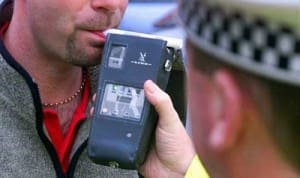
roadside breath testIn Canada, It is a criminal offence to intentionally fail or refuse to comply with a demand to provide a police officer with a breath sample for the purpose of assessing the concentration of alcohol in the body of the driver of a motor vehicle.



A person charged with refusing a breath sample in Toronto, Ontario may also be charged with impaired driving as well. You can read more information about impaired driving and other drinking and driving offences such as Driving Over 80 by clicking on: DUI Charges Toronto. (more…)

Drug Importing Into Canada

importing cocaine torontoIt is a criminal offence in Canada to import any type of drug including cocaine, marijuana, heroin, ecstasy or other drug prohibited by the Controlled Drugs and Substances Act. In Ontario, most drug importing charges arise out of crimes alleged to have been committed at Pearson International Airport in Brampton and are prosecuted at the Brampton Courthouse. Daniel Brown is an experienced criminal lawyer who frequently represents people accused of drug offences such as importing. To arrange a consultation to discuss your criminal law related matter, call (416) 297-7200.

Frequently asked questions about drug importing charges in Toronto, Ontario:

What does it mean to import drugs?

The term “importing" does not have a legal definition beyond its ordinary meaning. Importing drugs means to bring in drugs (or causing them to be brought) from anywhere outside Canada to anywhere inside Canada.

Can a person be convicted of importing drugs if they didn’t personally bring the drugs into Canada?

An accused person may be convicted of importing drugs even in the absence of evidence that he or she personally carried the drugs or was present at the point of entry. Proof that the accused caused the drugs to be brought into the country will be sufficient to ground an importing conviction.

What must the crown attorney prove to establish that an accused imported drugs into Canada?

In addition to establishing that the accused person brought drugs into Canada or caused drugs to be brought into Canada, the crown must also establish that the accused had knowledge that the substance brought into the country was a controlled drug or substance. If an accused person unknowingly brought drugs into Canada, they are not guilty of the offence of importing, as they would not possess the requisite knowledge sufficient to ground a conviction for the offence.

Is it a defence if the accused thought they were importing a different illegal drug into Canada?

The Crown attorney must only prove that the accused knew he or she was importing an illegal drug to establish the offence of importing. The Crown need not prove that the accused knew the specific name of the drug or substance in question.

Defences to importing drugs: necessity, duress, and entrapment

Necessity

In some rare circumstances, it may be possible to argue that the act of importing was done out of legal necessity.

For the defence of necessity to be successful it must be shown that 1) there is an urgent situation of imminent peril; 2) there must be no reasonable legal alternative to disobeying the law; and 3) there must be proportionality between the harm inflicted and the harm avoided.

In some cases it has been argued that the accused was not guilty of importing using the defence of necessity, due to external conditions which "forced" him to bring drugs into Canada such as bad weather or mechanical failure of the airplane or ship used to bring the narcotics elsewhere.

Duress:

Another potential defence to importing drugs is the defence of duress. Duress arises when a person commits a criminal offence under compulsion by threats of immediate death or bodily harm. In such circumstances the person may be excused for committing the offence if they believe that the threat of death or bodily harm will be carried out.

Entrapment:

In some instances, an accused may be excused for importing drugs into Canada if it can be shown that the police have entrapped an accused, by instigating and encouraging him or her into committing the offence of importing.

Here it must be shown that the offence was manufactured by the police, and would not have been committed if the police had not presented the scheme to the accused and then put pressure on him to take the bait.

Additionally, it may also be argued that the conduct of the police was so outrageous or unfair as to amount to an abuse of process which should result in the charge of importing to be thrown out of court. Follow this link for more information on entrapment.

What are the penalties for drug importing?

Depending on the type of drug being imported, the maximum penalty for importing a drug banned under the Controlled Drugs and Substances Act can range from 10 years to life in prison.

Most penalties for drug importation are based primarily on the type of drug being imported. The importation of “hard drugs” such as heroin or cocaine will demand higher sentences than “softer drugs” such as hashish or marijuana.

Furthermore, the weight and quantity of the drug also plays a significant factor in sentencing.

For drug importations alleged to have occurred after November 6th, 2012, mandatory minimum jail terms will apply to those found guilty of importing either a schedule 1 or schedule 2 drug under the Controlled Drugs and Substances Act. For a detailed list of the types of minimum sentences that may apply, read: "Mandatory Minimum Sentences for Serious Drug Offences in Canada".

Further offences for persons charged with importing drugs:

A person charged with importing cocaine or importing heroin may also be charged with being in possession of those drugs for the purpose of trafficking them. Click on the following topics to read more about the specific offence of possession for the purpose of trafficking drugs, producing drugs or drug trafficking.

Every allegation of drug importing is fact specific. Given the fact that most people charged with importing drugs face the potential of spending years in jail, if you or someone you know has been charged with drug importing, you should immediately contact a criminal lawyer for advice. Daniel Brown can be reached at (416) 297-7200 for a consultation.

Penalties for DUI Cases in Canada

Penalties for DUI Cases in Canada

Appeal Court TorontoThis article summarizes various types of reduced driving prohibitions for drinking and driving cases and identifies the preconditions for qualifying in Toronto, Ontario. Those seeking legal information on defending a drinking and driving case in Toronto, Ontario can read: Defending Drinking and Driving and Impaired Driving Charges.

Until recently, anyone convicted of their first drinking and driving offence in Canada involving a motor vehicle faced a minimum of a 12 month driving prohibition, followed by 12 months of only driving with an ignition interlock device (a device which requires a driver to provide a breath sample before a car’s ignition can be started, as well as requiring random tests while the ignition is on).

However, recent amendments to the Criminal Code of Canada have created reductions in driving prohibitions for first time offenders in an effort to reduce the number of drinking and driving cases that go to trial as well as encourage the use of the ignition interlock device as a rehabilitative tool.

Anyone convicted of a drinking and driving offence including impaired operation of a motor vehicle ("impaired driving"), driving with a blood-alchol level over the legal limit ("over 80") or failing/refusing to provide a breath sample will receive a minimum sentence of a criminal record and a minimum fine of $1000. The changes to the Criminal Code only affect whether or not a person is eligible to obtain their license without completing the traditional 12 month driving prohibition that used to accompany every drinking and driving conviction.

Driving Prohibition Reduction Categories

Reduced driving prohibtions fall into two categories: "Stream A" and "Stream B".

In “Stream A”: the driving prohibition is reduced to three months (from 12) , followed by 9 months of using an Interlock device in their vehicle.

In “Stream B”: the driving prohibition is reduced to six months of no driving, followed by 12 months of using an Interlock device.

How to Qualify for Stream A or Stream B

Those persons found guilty before August 3, 2010 (either by trial or by guilty plea) are not eligible for either stream.

Those who either plead guilty between August 3, 2010 and November 1, 2010 or those who plead guilty after November 1, 2010, within 90 days of the offence date are eligible for Stream A subject to meeting the minimum qualifications and completing the necessary paperwork with the Ministry of Transportation.

Those who entered guilty pleas after November 1, 2010, outside of 90 days of the offence date and those who took their matters to trial after August 3, 2010 are eligible for Stream B subject to meeting the minimum qualifications and completing the necessary paperwork with the Ministry of Transportation.

Minimum qualification for either Stream A or Stream B

  • The offence did not include impairment by drugs or impairment by a combination of drugs and alcohol.
  • The accused person has entered into a lease agreement for an ignition interlock device.
  • The accused person has completed a preliminary assessment with the Ministry of Transportation.
  • Within the past 5 years, the accused person has not been convicted for driving while disqualified (Criminal Code, s. 259(4)).
  • Within the past 10 years, the accused person has not been convicted for the following offences involving a motor vehicle:
      • Criminal negligence causing death or bodily harm (Criminal Code, ss. 220, 221)
      • Manslaughter (Criminal Code, s. 236)
      • Dangerous operation (Criminal Code, s. 249)
      • Flight (Criminal Code, s. 249.1)
      • Criminal negligence causing death or bodily harm (street racing) (Criminal Code, ss. 249.2, 249.3)
      • Dangerous operation while street racing (Criminal Code, s. 249.4)
      • Impaired operation/care or control; Over 80 operation/care or control; refuse/failure to comply with a demand (Criminal Code, ss. 253, 254, 255).
  • The accused person was not required to use an interlock device at the time of the offence.
  • The accused person has not received a lifetime suspension for multiple convictions of offences listed above, which was then subsequently reduced to a 10-year suspension.
  • The offence did not cause death or bodily harm.
  • No order by a judge otherwise precluding eligibility for Stream A or Stream B.

Order by judge to preclude eligibility:

Notwithstanding the fact that one meets the minimum qualifications for the reduced driving prohibition, a judge may make an order precluding eligibility. Factors to be considered by a judge could include whether there was an accident, the level of the blood alcohol readings, a bad driving record, a criminal record showing that a person has a history of not complying with court orders, or the circumstances of the offence.

Listed below are some frequently asked questions about the reduced driving prohibitions

Does a person qualify for the reduced driving prohibitions program if they are charged with just refusing or failing to provide a breath sample?

Yes.

Does the program apply retroactively? If a person was found guilty prior to August 3, 2010, and are still serving their 12 month driving prohibition on August 3, 2010, can they apply to have the prohibition reduced?

No. The Ministry of Transportation has decided it will not apply retroactively.

What if the offence involves an accident? What if the blood-alcohol content readings are very high?

A person can still the meet the minimum qualifications, provided a judge does not order otherwise, and in cases of an accident, provided the offence did not cause death or bodily harm.

To learn more about whether you are eligible for any of the reduced driving prohibition programs or to discuss a drinking and driving case call Daniel Brown for a consultation at (416) 297-7200.