 Skip to main content
Possession of a Weapon for a Dangerous Purpose Lawyers Toronto
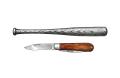
Possession of a weapon for a dangerous purpose means carrying or possessing a weapon, an imitation of a weapon, a prohibited device, or ammunition for a purpose dangerous to the public peace, or to commit an offence, under section 88 of the Criminal Code. It is a hybrid offence with a maximum of 10 years in prison. Carrying a concealed weapon (section 90, up to five years) and carrying a weapon to a public meeting (section 89) are related charges. Our lawyers defend all three in Toronto and across the GTA.
Defending dangerous weapons charges in Ontario
Almost anything can be a weapon under the Criminal Code: a knife, a bat, a hammer, a bottle, even a dog. What turns an ordinary object into a criminal charge is the purpose the person had for it. That is why these cases so often come down to what the accused intended, and when.
A knife carried for work, a bat kept in the car for a game, or a tool picked up in a panic are not the same as a weapon carried to hurt or frighten someone. The Crown has to prove the dangerous purpose beyond a reasonable doubt. Charges for unlicensed or loaded firearms are covered on our page on gun and weapon possession charges.
Daniel Brown Law defends weapons charges across the Greater Toronto Area and Ontario, including Toronto, Newmarket, Oshawa, Brampton, and Milton. Daniel Brown Law is recognized among Canada’s top criminal defence firms — see our recognition below.
If you or someone you know has been charged with possession of a weapon for a dangerous purpose, contact our office immediately at (416) 297-7200.
- The charge
- Criminal Code s. 88Possession of a weapon for a dangerous purpose
- Crown must prove
- A weapon, and a dangerous purposeHeld at the same time, not a reflex in the moment
- Maximum sentence
- 10 yearsHybrid; summary conviction also possible
- Related charges
- Concealed weaponSection 90, up to 5 years; public meeting, section 89
When does carrying a weapon become a crime?
Owning or carrying something that could hurt someone is usually lawful. The charge depends on why it was carried, whether it was hidden, and where it was taken.
Sections 88 to 90 and 267 of the Criminal Code. For firearms specifically, see pointing or using a firearm, or gun and weapon possession charges.
Key considerations
The purpose is the offence
The crucial element is the accused’s purpose for having the weapon, and whether that purpose was dangerous to the public peace or to commit an offence. What the object was actually used for is not the test, although it can help prove that the object was a weapon and why the person had it.
A spur-of-the-moment reaction is not enough
The possession and the dangerous purpose must exist together for a period of time. A reflexive intention formed in a split second does not qualify. Grabbing a weapon in response to a forced police entry, for example, did not prove any dangerous purpose that existed beforehand.
Almost anything can be a weapon
A weapon is anything used, designed, or intended to cause death or injury, or to threaten or intimidate. A firearm is always a weapon. Knives, bats, bottles, hammers, and even a dog have been treated as weapons because of how they were used or meant to be used. An imitation of a weapon is covered too.
Self-defence is not automatically a dangerous purpose
A weapon carried reasonably for self-defence does not fall within the offence. An inmate who carried a concealed knife for self-protection, for example, was not necessarily guilty. But a self-defence motive does not always protect the accused: it depends on whether carrying the weapon was reasonable in the circumstances.
“Carrying” includes a car
Carrying a weapon is not limited to carrying it on your body. A weapon in a vehicle can be carried. Whether a passenger is in possession of something in a car depends on knowledge and control.
Your home is not a safe harbour
Possessing a weapon inside a private home does not rule out a conviction. If the dangerous purpose is proven, the offence can be committed anywhere.
What is carrying a concealed weapon?
Carrying a weapon, a prohibited device, or prohibited ammunition hidden from view is an offence under section 90, unless the person is authorized under the Firearms Act to carry it concealed. It is a hybrid offence with a maximum of five years by indictment.
It must be a weapon
The Crown must prove that the hidden item was a weapon, not merely something that could fit the definition of a firearm. The accused must also have known that what they were concealing was a weapon.
Concealment means hiding it
Concealment requires an intention to hide the item so that it would not be seen or noticed by others. A clearly labelled firearms case, or a container used to comply with federal transport rules, is not concealment.
A car counts
As with possession for a dangerous purpose, “carries” includes a weapon in a vehicle, not only one on the person.
Weapons at a public meeting
Carrying a weapon, a prohibited device, or any ammunition while attending, or on the way to, a public meeting, without lawful excuse, is a separate offence under section 89. It can only be prosecuted by summary conviction.
How do you defend a weapon for a dangerous purpose charge?
Each defence answers a different part of the Crown’s case.
There was no dangerous purpose
Attacks: the purpose
Most people who carry a knife, a tool, or a bat have an ordinary reason. Work, sport, a hobby, or simply forgetting it was in a bag can all raise a reasonable doubt about any dangerous purpose.
The purpose came only in the moment
Attacks: timing
The weapon and the dangerous purpose must exist together for some period. A panicked, reflexive reaction to a sudden threat is not the pre-existing purpose the offence requires.
It was carried for reasonable self-defence
Attacks: the purpose
A weapon carried reasonably in self-defence does not fall within the offence. The circumstances, including real threats the accused faced, can show the purpose was protective, not dangerous.
It was not a weapon
Attacks: the object
An ordinary object is only a weapon if it was used, designed, or intended to cause injury or to threaten. Without proof of that use or intent, a hammer is just a hammer.
You did not possess it
Attacks: possession
A weapon found in a shared car or home is not automatically yours. Possession requires knowledge of the item and some control over it. Being near it, or knowing it was there, is not enough on its own.
The evidence was obtained unlawfully
Attacks: the evidence itself
Charter rights breaches: excluding a weapon found in an unlawful search of a person, a car, or a bag, or a statement taken without access to a lawyer.
Do not give the police a statement before you get legal advice. You are not required to, and what you say can be used against you — including an explanation of why you had the item, which is often the Crown’s best evidence of purpose.
What is the sentence for possession of a weapon for a dangerous purpose?
The maximum is 10 years if the Crown proceeds by indictment. There is no mandatory minimum, so every sentencing option is open.
| Charge | Maximum | Mandatory minimum |
|---|---|---|
| Possession of a weapon for a dangerous purposes. 88 — hybrid | 10 years | None |
| Carrying a concealed weapons. 90 — hybrid | 5 years | None |
| Carrying a weapon to a public meetings. 89 — summary only | Summary maximum | None |
| Assault with a weapons. 267 — hybrid | 10 years | None |
Possession of a weapon for a dangerous purpose and carrying a concealed weapon are hybrid offences: the Crown can proceed by indictment, with the maximums above, or by summary conviction, with lower maximums. Carrying a weapon to a public meeting can only be prosecuted summarily. None of these offences carries a mandatory minimum, so discharges and conditional sentences can be available in the right case.
Where violence was used, threatened, or attempted in a dangerous purpose offence, the court must make a weapons prohibition order. In other cases, the court may make one. The weapon is forfeited on conviction.
A person cannot always be convicted of both possession for a dangerous purpose and assault with a weapon. Where the same evidence, such as pointing the weapon with a threat to use it, proves both, and the two offences are made up of substantially the same elements, only one conviction can stand. The same rule can bar separate convictions for uttering threats and weapon possession where both are bound up in a sexual assault conviction.
Consequences of a weapons conviction
A weapons conviction goes far beyond jail time. Collateral consequences can include:
- A weapons prohibition that ends hunting, sport shooting, and some careers
- Job loss and disqualification from certain professions
- Immigration problems, including possible deportation for non-citizens
- Denial of entry into the United States and other countries
- A criminal record stored in the national CPIC database
For more on collateral impacts, see our page on the immigration consequences of a criminal charge.
Why choose Daniel Brown Law for your weapons case?
A weapons charge turns on intent, and intent is proven through what you said and did. The lawyer hired in the first 48 hours often shapes the entire case — bail conditions, disclosure strategy, and whether the Crown can prove a dangerous purpose at all.
A nationally recognized defence firm
Daniel Brown Law is consistently recognized as one of Canada’s leading criminal defence firms. Canadian Lawyer ranks it among Canada’s top criminal law boutiques, The Globe and Mail names it one of Canada’s Best Law Firms, Best Law Firms ranks it Tier 1 for criminal defence, and Toronto Star readers have repeatedly voted it Best Law Firm.
A boutique focused on criminal defence
Daniel Brown Law represents people charged with crimes — that is all the firm does. Our lawyers have defended weapons cases at every level of court in Ontario, from first-appearance bail hearings to contested jury trials to appeals at the Court of Appeal for Ontario.
We build the innocent explanation
Most people charged with this offence had an ordinary reason for the item. We gather the evidence that shows it: work records, witnesses, and the circumstances that explain why it was there.
We start with the search
Weapons are usually found in a search of a person, a car, or a bag. We test whether that search was lawful, because evidence excluded under the Charter can end the case.
Resolutions that protect your record
With no mandatory minimum, a withdrawal, a peace bond, or a discharge is often possible. We push for the outcome that keeps a criminal record off your future.
Across the GTA and Ontario
We appear regularly in Toronto, Newmarket, Oshawa, Brampton, Milton, Hamilton, and Barrie courthouses, and travel to other Ontario courts as a case requires.
Recognized by the profession and the public
Daniel Brown Law is named one of Canada’s Best Law Firms by The Globe and Mail, ranked among Canada’s top criminal law boutiques by Canadian Lawyer, ranked Tier 1 for criminal defence by Best Law Firms, and voted Best Law Firm by Toronto Star readers. Five of its lawyers are recognized by Best Lawyers in Canada for criminal defence.

Best Law Firms: Criminal Law
The Globe and Mail, 2026

Top Criminal Law Boutique
Canadian Lawyer, 2026–27

Criminal Defence, Tier 1
Best Law Firms Canada, 2026

Best Lawyers in Canada
Criminal Defence, 2027

Crime, Nationwide
Chambers Canada, 2027

Toronto Star Readers’ Choice
Best Law Firm and Best Legal Services, repeat winner
Daniel Brown Law is consistently recognized as one of Canada's leading criminal defence firms.
- Named one of Canada's Best Law Firms for 2026 by The Globe and Mail
- Ranked among the Top Criminal Law Boutiques in Canada (2026-27) by Canadian Lawyer Magazine
- Recognized by Best Law Firms (from Best Lawyers) as a leading criminal defence and appellate firm, Tier 1 for criminal defence
- Daniel Brown, Hilary Dudding, Mark Halfyard, Lindsay Board, and Colleen McKeown are individually listed in The Best Lawyers in Canada for criminal defence
- Repeat winners in the Toronto Star Readers' Choice Awards for Best Lawyer, Best Law Firm, and Best Legal Services
- Chambers Canada 2027 — ranked for Crime, nationwide, by Chambers and Partners
- Daniel Brown and Mark Halfyard are certified specialists in criminal law as designated by the Law Society of Ontario — a designation held by fewer than 2% of criminal lawyers in Ontario
What happens after a weapons charge?
The first weeks after a weapons charge, and above all the bail hearing, often shape the whole case.
-
Arrest and the bail hearing
Most people charged with a weapons offence are released. The onus shifts to you to show why you should be released if you were already on release for another indictable offence, or were under a weapons prohibition order. We prepare the release plan and sureties where they are needed.
-
Disclosure
The Crown must disclose its case: witness statements, video, the search, and any statement you made. We test all of it.
-
Charter application
If the weapon was found in a search, we examine whether the search was lawful and apply to exclude the evidence where it was not.
-
Resolution
Many weapons cases resolve without a trial: charges withdrawn, a peace bond, a discharge, or a plea to a less serious offence.
-
Trial, and appeal if needed
At trial the Crown must prove every element beyond a reasonable doubt, including the dangerous purpose. A conviction or sentence can be appealed.
Frequently asked questions about weapons charges in Ontario
Plain answers to the questions people ask most after a weapon for a dangerous purpose charge.
The charge
What is possession of a weapon for a dangerous purpose?
It is an offence under section 88 of the Criminal Code to carry or possess a weapon, an imitation of a weapon, a prohibited device, or any ammunition or prohibited ammunition for a purpose dangerous to the public peace, or for the purpose of committing an offence.
What does the Crown have to prove?
That the accused carried or possessed the item; that it was a weapon, an imitation of a weapon, a prohibited device, or ammunition; and that the accused’s purpose for having it was dangerous to the public peace or to commit an offence. The possession and the purpose must exist together for a period of time.
Does the weapon have to be used?
No. The offence is about the purpose for having the weapon, not what it was actually used for. Actual use is still relevant, because it can help prove that the item was a weapon and why the accused had it.
What counts as a weapon?
Anything used, designed to be used, or intended for use in causing death or injury to anyone, or in threatening or intimidating anyone. A firearm is always a weapon. Everyday objects such as a knife, a bat, a bottle, or a hammer become weapons when they are used or intended for those purposes.
Can I be charged for a weapon in my car or my home?
Yes. “Carrying” is not limited to carrying on your person and includes a weapon in a vehicle. Possession inside a private home also does not rule out a conviction if a dangerous purpose is proven.
Purpose and self-defence
Is carrying a knife for self-defence illegal in Canada?
Not necessarily. A weapon carried reasonably in self-defence does not fall within section 88. An inmate who carried a concealed knife for self-protection, for example, was not necessarily guilty. But a self-defence purpose does not always prevent a conviction: whether carrying the weapon was reasonable depends on the circumstances. A concealed weapon can also be charged separately under section 90.
What if I only grabbed the weapon in the heat of the moment?
A reflexive, spur-of-the-moment intention is not enough. There must be a period when the possession and the dangerous purpose existed together. Picking up a weapon in response to a forced police entry, for example, did not prove any dangerous purpose that existed beforehand.
Can I be convicted of both this charge and assault with a weapon?
Not always. Where the evidence for the assault and for the dangerous purpose is the same, such as pointing the weapon with a threat to use it, and the two offences have substantially the same elements, the rule against multiple convictions allows only one conviction. Where the elements of uttering threats and weapon possession are bound up in a sexual assault conviction, separate convictions for them are also barred.
Concealed weapons and public meetings
What is carrying a concealed weapon?
Carrying a weapon, a prohibited device, or prohibited ammunition hidden from view, without authorization under the Firearms Act to carry it concealed. It is a hybrid offence under section 90 with a maximum of five years by indictment.
What does “concealed” mean?
An intention to hide the item so it would not be seen or noticed by others. A clearly labelled firearms case, or a container used to comply with federal regulations, is not concealment. The accused must also know that what they were concealing was a weapon, and the Crown must prove it was a weapon, not just something that could fit the definition of a firearm.
Can I be convicted of carrying a concealed weapon and possessing a restricted weapon?
Yes. A person can be convicted of both carrying a concealed weapon and possessing a restricted weapon.
Is it illegal to bring a weapon to a public meeting?
Yes, without lawful excuse. Section 89 makes it an offence to carry a weapon, a prohibited device, or any ammunition or prohibited ammunition while attending, or on the way to, a public meeting. It can only be prosecuted by summary conviction.
Sentencing and bail
What is the sentence for possession of a weapon for a dangerous purpose?
It is a hybrid offence. If the Crown proceeds by indictment, the maximum is 10 years. If it proceeds summarily, the lower summary conviction maximums apply. There is no mandatory minimum.
Can I get a discharge?
A discharge can be available, because there is no mandatory minimum and the maximum is not 14 years or life. Whether it is appropriate depends on the facts, your background, and whether it is in your interest and not contrary to the public interest.
Will I get a weapons prohibition?
If violence was used, threatened, or attempted in the offence, a weapons prohibition order is mandatory. Otherwise, the court may make one.
What happens at bail on a weapons charge?
Most people are released. The onus shifts to the accused if they were already on release for another indictable offence or were under a weapons prohibition order. Learn more on our page about Toronto bail hearings.
What charges are laid alongside a dangerous purpose charge?
Weapons charges often arrive alongside assault with a weapon, uttering threats, robbery, gun and weapon possession charges, or failing to comply with bail conditions.
Charges we defend
Learn more about some of the charges we defend. We also defend charges not listed here.
- Assault
- Bail hearings
- Bail pending appeal
- Coercive control
- Criminal appeals
- Criminal harassment
- Dangerous driving
- Distributing an intimate image
- Domestic assault
- Drug possession
- Drug trafficking
- Extortion
- Extradition
- Fail to appear at court
- Fail to comply with bail
- Failing to remain at the scene
- Firearm and weapon possession
- Forcible confinement
- Fraud
- Impaired driving
- Importing drugs
- Mischief
- Murder and manslaughter
- Obstruct police
- Peace bonds
- Pointing or using a firearm
- Public mischief
- Refusing a breath sample
- Robbery
- Sexual assault
- Sexual exploitation
- Theft and shoplifting
- Uttering threats
- Voyeurism
- Weapon for a dangerous purpose
- Young offenders
Charged with a weapons offence? Speak with Daniel Brown Law
Call Daniel Brown Law at (416) 297-7200 for a confidential consultation. We appear in courts across the GTA and Ontario.