 Skip to main content
Pointing a Firearm Lawyers Toronto
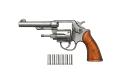
Pointing a firearm at another person without lawful excuse is an offence under section 87 of the Criminal Code, whether the firearm is loaded or unloaded. It is a hybrid offence with a maximum of five years in prison. Using a firearm or an imitation firearm while committing another indictable offence is a separate charge under section 85, with a maximum of 14 years that must be served consecutively to any other sentence. Our lawyers defend pointing, using, and careless use of firearm charges in Toronto and across the GTA.
Defending firearm use charges in Ontario
Firearm use charges are about what a person did with a gun, not just whether they had one. Pointing a firearm, using one during another offence, and handling one carelessly are each separate offences with their own elements, defences, and penalties. Possession charges, including section 95, are covered on our page on gun and weapon possession charges.
Many of these cases turn on a single moment: whether a gun was pointed at someone or just held, whether an object was a real firearm, an imitation, or neither, and whether showing it amounted to “use” in law. Those questions often decide the case.
Daniel Brown Law defends firearm charges across the Greater Toronto Area and Ontario, including Toronto, Newmarket, Oshawa, Brampton, and Milton. Daniel Brown Law is recognized among Canada’s top criminal defence firms — see our recognition below.
If you or someone you know has been charged with pointing or using a firearm, contact our office immediately at (416) 297-7200.
- The charges
- Criminal Code ss. 85–87Using, careless use, and pointing
- Pointing: Crown must prove
- A firearm pointed at a personLoaded or unloaded, without lawful excuse
- Maximum sentence
- 5 to 14 years5 for pointing; 14 for using a firearm in an offence
- Using a firearm
- ConsecutiveServed on top of the sentence for the other offence
How serious is a firearm use charge?
The charge depends on what was done with the firearm. Handling it carelessly, pointing it at someone, and using it to commit another crime are three different offences, and the penalties rise steeply from one to the next.
Sections 85 to 87 of the Criminal Code. Having a firearm without using it is a possession offence instead — see gun and weapon possession charges.
Key considerations
Unloaded still counts
Pointing a firearm is an offence whether the firearm is loaded or unloaded. The law protects people from the fear of being shot as well as from the danger itself.
Showing a gun can be “use”
Using a firearm is broader than shooting it or pointing it. Taking a firearm out and holding it is use. So is revealing, by words or conduct, that a firearm is present or immediately available, to help commit an offence or to escape. A gun kept hidden and never revealed is not used.
An imitation is anything that looks real
An imitation firearm is anything that imitates a firearm, including a replica. It can even be a real firearm. Using an imitation during an indictable offence carries the same 14-year maximum as using a real one, even if the victim knew it was fake.
A broken gun may still be a firearm
An inoperable weapon is still a firearm if it can readily be made operable. An air pistol that cannot cause serious harm is not. Whether a gun worked can be proven by showing it was fired, by expert testing, or by witnesses who know guns.
No conviction, no use charge
A section 85 charge depends on a conviction for the underlying indictable offence. If the accused is acquitted of the robbery, assault, or other offence the firearm was allegedly used in, the use charge falls with it.
Each offence is a separate count
Using the same firearm in separate offences, in separate transactions, is a separate section 85 offence each time. Two robberies with one gun can mean two consecutive firearm sentences.
What is a firearm under the Criminal Code?
A firearm is a barrelled weapon from which any shot, bullet, or other projectile can be discharged and that is capable of causing serious bodily injury or death to a person. The definition includes any frame or receiver of such a weapon, and anything that can be adapted for use as a firearm.
Non-restricted firearm
Any firearm that is neither prohibited nor restricted. Most ordinary hunting rifles and shotguns fall in this class.
Restricted firearm
A handgun that is not prohibited; a firearm that is not prohibited, has a barrel under 470 mm, and can fire centre-fire ammunition semi-automatically; a firearm designed or adapted to fire when folded or telescoped to under 660 mm; or any firearm prescribed as restricted.
Prohibited firearm
A handgun with a barrel of 105 mm or less, or designed for 25 or 32 calibre (except prescribed competition handguns); a rifle or shotgun cut down to under 660 mm overall, or with a barrel under 457 mm; an automatic firearm, even if converted to fire one shot at a time; any prescribed prohibited firearm; any unlawfully manufactured firearm, however it was made; and a non-handgun semi-automatic centre-fire firearm originally designed with a detachable magazine of six or more cartridges and designed and manufactured on or after December 15, 2023.
Automatic and semi-automatic
An automatic firearm can fire projectiles in rapid succession during one pressure of the trigger, or was assembled, designed, or manufactured with that capability. A semi-automatic firearm automatically completes part of the reloading cycle after each shot to prepare for the next one.
Handgun and firearm part
A handgun is a firearm designed, altered, or intended to be aimed and fired with one hand, even if it has since been altered to need two. A firearm part is a barrel, a handgun slide, or another prescribed part, but not a barrel or slide designed only for a weapon the law deems not to be a firearm.
Replica and imitation firearm
A replica is a device designed or intended to exactly resemble, or resemble with near precision, a firearm that fires above 152.4 m per second and 5.7 joules, and that is not itself a firearm (replicas of antique firearms are excluded). An imitation firearm is broader: anything that imitates a firearm, including a replica.
Real cases at the edge of the definition
- An unloaded rifle is a firearm.
- An inoperable air pistol is not a firearm, because it cannot cause serious harm.
- An inoperable weapon that can readily be made operable is a firearm.
- A pellet gun discharged by a spring mechanism has been found not to be a firearm.
What is a weapon?
A weapon is anything used, designed to be used, or intended for use in causing death or injury to anyone, or in threatening or intimidating anyone. A firearm is always a weapon, whatever the person holding it intended. Other things become weapons by how they are used: a bomb, a knife used to threaten, a beer bottle, a dog, and an object used in a sexual assault that caused injuries have all been treated as weapons. A spring-loaded pellet gun that was not being used for a purpose dangerous to the public peace was found not to be a weapon.
Weapons the law deems not to be firearms
For the possession, trafficking, and import offences and the Firearms Act, the following are deemed not to be firearms:
- Antique firearms: any firearm made before 1898 that was not designed, and has not been redesigned, to fire rim-fire or centre-fire ammunition, or any firearm prescribed as an antique
- Devices designed only for signalling, distress, blank cartridges, or industrial projectiles such as stud cartridges and explosive-driven rivets, and intended by the person who has them to be used only for that purpose
- Devices designed only for slaughtering domestic animals, tranquillizing animals, or firing projectiles with lines attached, and intended to be used only for that purpose
- Any other barrelled weapon proven not to be designed or adapted to fire a projectile faster than 152.4 m per second or with more than 5.7 joules of energy
These exemptions do not apply to the use offences in sections 85 to 87. A device that meets the basic definition of a firearm can still ground a pointing or using charge.
How do you defend a pointing or using a firearm charge?
Each defence answers a different part of the Crown’s case.
It was not a firearm
Attacks: the firearm
The Crown must prove the object was a barrelled weapon capable of causing serious bodily injury or death. If the gun was never fired or recovered, and no knowledgeable witness can say it worked, there may be a reasonable doubt. An imitation firearm is a different and narrower charge that cannot replace a pointing charge.
It was not pointed at anyone
Attacks: the act
Holding, displaying, or carrying a firearm is not pointing it. Witnesses to a fast, frightening event often disagree about where a gun was aimed. Video, angles, and distances can show that it was never directed at a person.
There was a lawful excuse
Attacks: lawful excuse
Pointing and careless use are offences only without lawful excuse. Self-defence and defence of others can apply where a firearm was pointed to stop an attack, if the response was reasonable in the circumstances.
There was no “use”
Attacks: use
A firearm that stayed hidden and was never revealed, by words or conduct, was not used. The firearm must also have been in the accused’s physical possession or readily at hand. Where several people were involved, the Crown must prove each person’s role.
It was not careless
Attacks: the standard of care
Careless use requires a marked departure from what a reasonably prudent person would do. If there is a reasonable doubt that the conduct was a marked departure, or that reasonable precautions were taken, there must be an acquittal. A storage charge also allows a defence of mistake of fact or due diligence.
The evidence was obtained unlawfully
Attacks: the evidence itself
Charter rights breaches: excluding a firearm found in an unlawful search of a car, home, or bag, or a statement taken without access to a lawyer. Without the gun, the Crown often cannot prove it was a firearm at all.
Do not give the police a statement before you get legal advice. You are not required to, and what you say can be used against you — including an explanation of why you had the firearm or where it was pointed.
What is the sentence for pointing a firearm in Canada?
Pointing a firearm carries a maximum of five years. Using a firearm or an imitation firearm in an indictable offence carries up to 14 years, served on top of the sentence for the other offence.
| Charge | Maximum | Mandatory minimum |
|---|---|---|
| Pointing a firearms. 87 — hybrid | 5 years | None |
| Careless use or storage of a firearms. 86 — hybrid | 2 years; 5 for a repeat offence | None |
| Using a firearm in an indictable offences. 85(1) — indictable only | 14 years | None; must be consecutive |
| Using an imitation firearm in an indictable offences. 85(2) — indictable only | 14 years | None; must be consecutive |
Pointing a firearm and careless use are hybrid offences: the Crown can proceed by indictment, with the maximums above, or by summary conviction. Using a firearm or an imitation firearm in an offence can only be prosecuted by indictment. The mandatory minimum sentences that once applied to section 85 were repealed in 2022, but the consecutive-sentence rule remains.
A sentence for using a firearm or an imitation firearm must be served consecutively to the sentence for the offence it was used in, to any other sentence for an offence from the same event or series of events, and to any other section 85 sentence the person is serving. Where several section 85 offences are sentenced together, the prevailing view is that they run consecutively to each other as well as to the underlying offences. The judge must still apply the totality principle so the combined sentence is not unduly long or harsh. A sentence cannot be made consecutive to a life sentence, and credit for pre-trial custody can be applied to the consecutive firearm sentence.
A conviction for using a firearm or an imitation firearm brings a mandatory weapons prohibition order: on a first conviction, at least 10 years for ordinary firearms and life for prohibited and restricted firearms; on a later conviction, life. For pointing and careless use, the court may make a prohibition order. A firearm involved in the offence is forfeited on conviction.

Consequences of a firearm conviction
A firearm conviction goes far beyond jail time. Collateral consequences can include:
- A weapons prohibition that ends hunting, sport shooting, and some careers
- Job loss and disqualification from certain professions
- Immigration problems, including possible deportation for non-citizens
- Denial of entry into the United States and other countries
- A criminal record stored in the national CPIC database
For more on collateral impacts, see our page on the immigration consequences of a criminal charge.
Why choose Daniel Brown Law for your firearm case?
A firearm use conviction can mean a consecutive penitentiary sentence and a lifetime weapons prohibition. The lawyer hired in the first 48 hours often shapes the entire case — bail conditions, disclosure strategy, and whether the firearm evidence survives a Charter challenge.
A nationally recognized defence firm
Daniel Brown Law is consistently recognized as one of Canada’s leading criminal defence firms. Canadian Lawyer ranks it among Canada’s top criminal law boutiques, The Globe and Mail names it one of Canada’s Best Law Firms, Best Law Firms ranks it Tier 1 for criminal defence, and Toronto Star readers have repeatedly voted it Best Law Firm.
A boutique focused on criminal defence
Daniel Brown Law represents people charged with crimes — that is all the firm does. Our lawyers have defended firearm cases at every level of court in Ontario, from first-appearance bail hearings to contested jury trials to appeals at the Court of Appeal for Ontario.
We start with the search
Most firearm cases begin with a search of a car, a home, or a person. We test whether that search was lawful before anything else, because a gun excluded under the Charter often ends the case.
Firearm evidence, tested properly
Whether an object was a firearm, an imitation, or neither is a technical question. We scrutinize operability testing, expert reports, and eyewitness descriptions of what was seen and where it was pointed.
Trial and appellate capability under one roof
Consecutive sentences and prohibition orders make firearm cases strong candidates for appeal. Our lawyers handle both stages, so the trial record is built with appellate review in mind. Read more about our criminal appeals practice.
Across the GTA and Ontario
We appear regularly in Toronto, Newmarket, Oshawa, Brampton, Milton, Hamilton, and Barrie courthouses, and travel to other Ontario courts as a case requires.
Recognized by the profession and the public
Daniel Brown Law is named one of Canada’s Best Law Firms by The Globe and Mail, ranked among Canada’s top criminal law boutiques by Canadian Lawyer, ranked Tier 1 for criminal defence by Best Law Firms, and voted Best Law Firm by Toronto Star readers. Five of its lawyers are recognized by Best Lawyers in Canada for criminal defence.

Best Law Firms: Criminal Law
The Globe and Mail, 2026

Top Criminal Law Boutique
Canadian Lawyer, 2026–27

Criminal Defence, Tier 1
Best Law Firms Canada, 2026

Best Lawyers in Canada
Criminal Defence, 2027

Crime, Nationwide
Chambers Canada, 2027

Toronto Star Readers’ Choice
Best Law Firm and Best Legal Services, repeat winner
Daniel Brown Law is consistently recognized as one of Canada's leading criminal defence firms.
- Named one of Canada's Best Law Firms for 2026 by The Globe and Mail
- Ranked among the Top Criminal Law Boutiques in Canada (2026-27) by Canadian Lawyer Magazine
- Recognized by Best Law Firms (from Best Lawyers) as a leading criminal defence and appellate firm, Tier 1 for criminal defence
- Daniel Brown, Hilary Dudding, Mark Halfyard, Lindsay Board, and Colleen McKeown are individually listed in The Best Lawyers in Canada for criminal defence
- Repeat winners in the Toronto Star Readers' Choice Awards for Best Lawyer, Best Law Firm, and Best Legal Services
- Chambers Canada 2027 — ranked for Crime, nationwide, by Chambers and Partners
- Daniel Brown and Mark Halfyard are certified specialists in criminal law as designated by the Law Society of Ontario — a designation held by fewer than 2% of criminal lawyers in Ontario
What happens after a firearm charge?
The first weeks after a firearm charge, and above all the bail hearing, often shape the whole case.
-
Arrest and the bail hearing
Firearm charges are taken seriously at bail. The onus shifts to you to show why you should be released if you were already on release for another indictable offence, were under a weapons prohibition order, or are accused of violence with a weapon and have a prior record of it. We prepare the release plan and sureties before the hearing.
-
Disclosure
The Crown must disclose its case: witness statements, video, search warrants, and any firearm examination or operability report. We test all of it.
-
Charter application
If the firearm was found in a search, we examine whether the search was lawful and apply to exclude the evidence where it was not.
-
Resolution
Many firearm cases resolve without a trial: charges withdrawn, a use charge dropped in exchange for a plea to a lesser offence, or a negotiated sentence.
-
Trial, and appeal if needed
At trial the Crown must prove every element beyond a reasonable doubt, including that the object was a firearm. A conviction or sentence can be appealed.
Frequently asked questions about firearm use charges in Ontario
Plain answers to the questions people ask most after a pointing or using a firearm charge.
Pointing a firearm
What is the charge for pointing a gun at someone?
Pointing a firearm, under section 87 of the Criminal Code. It is an offence to point a firearm at another person without lawful excuse, whether the firearm is loaded or unloaded. Depending on the facts, the Crown may also lay assault with a weapon, uttering threats, or using a firearm in the commission of an offence.
What is the sentence for pointing a firearm?
Pointing a firearm is a hybrid offence. If the Crown proceeds by indictment, the maximum is five years. If it proceeds summarily, the lower summary conviction maximums apply. There is no mandatory minimum.
Is pointing an unloaded gun a crime?
Yes. Section 87 applies whether the firearm is loaded or unloaded.
Is careless use of a firearm included in a pointing charge?
No. Careless use or careless handling of a firearm is not an included offence in a charge of pointing a firearm, so a judge cannot convict of careless use on a pointing charge alone.
Can I be convicted of both pointing a firearm and assault with a weapon?
Not where both rest on the same act. The rule against multiple convictions bars convictions for assault with a weapon and possession of a weapon for a dangerous purpose where the same evidence, the pointing of the weapon with a threat to use it, proves both. The same rule bars convictions for both pointing a firearm and using that firearm in the commission of an offence.
Using a firearm
What does “using” a firearm mean?
It is broader than shooting the firearm or pointing it at someone. Taking a firearm out and holding it is use. A person uses a firearm when, to help commit an offence or to escape, they reveal by words or conduct that a firearm is present or immediately available. The firearm must be in their physical possession or readily at hand. Keeping a gun hidden is not use.
What does the Crown have to prove on a section 85 charge?
That the accused used a firearm, or an imitation firearm, while committing or attempting an indictable offence, or while fleeing after one. It is a general intent offence: the only mental element is the intention to use the firearm while committing the underlying offence. No ulterior purpose has to be proven, and the mental element is separate from the one for the underlying offence.
Which offences are excluded from section 85?
Using a real firearm is not charged separately where the underlying offence already carries its own firearm penalties: criminal negligence causing death, manslaughter, attempted murder, discharging a firearm with intent or recklessly, sexual assault with a weapon, aggravated sexual assault, kidnapping, hostage taking, robbery, and extortion. Using an imitation firearm can be charged with any indictable offence.
Do I have to be convicted of the other offence?
Yes. A conviction under section 85 requires a conviction for the underlying indictable offence. It is not enough that the accused could be shown to have committed some other indictable offence they were not charged with and convicted of.
Can I be convicted of using a firearm and of the other offence too?
Usually, yes. Double convictions are barred only where the other offence makes use of a firearm, as distinct from possession, part of its own elements, such as pointing a firearm. Courts have upheld separate convictions for using a firearm alongside assault with a weapon, aggravated assault, causing bodily harm with intent, robbery, and discharging a firearm with intent to wound.
Can I be convicted as a party?
Yes. Where two or more people act together, the usual rules on parties to an offence apply, so a person who did not hold the firearm can still be convicted of using it.
Does it matter if the victim knew the gun was fake?
No. Using an imitation firearm while committing an assault can be proven even if the victim knew the item was an imitation.
Careless use and storage
What is careless use of a firearm?
Using, carrying, handling, shipping, transporting, or storing a firearm, a prohibited or restricted weapon, a prohibited device, or any ammunition in a careless manner, or without reasonable precautions for the safety of others, without lawful excuse. The core of the offence is conduct that is a marked departure from the standard of care of a reasonably prudent person. Psychological trauma to someone who was not in danger of physical injury or death does not count as a risk to the safety of others.
What is unsafe storage of a firearm?
It is an offence to break the regulations under the Firearms Act on storing, handling, transporting, shipping, displaying, advertising, or mail-order sales of firearms and restricted weapons. Temporary storage is covered. It is not an absolute liability offence: a reasonable doubt about a mistake of fact, or about due diligence in trying to comply, requires an acquittal.
What is the penalty for careless use or unsafe storage?
Both are hybrid offences. By indictment, the maximum is two years for a first offence and five years for a second or subsequent offence. The firearm involved must be forfeited on conviction. Careless use is an included offence in discharging a firearm with intent to endanger life.
Sentencing and bail
Is there a mandatory minimum for using a firearm in an offence?
No longer. The mandatory minimums for section 85 were repealed in 2022. The maximum is 14 years, and the sentence must be served consecutively to the sentence for the underlying offence and to any other sentence from the same event.
Do multiple firearm sentences run one after another?
The prevailing view is yes: section 85 sentences imposed at the same hearing run consecutively to each other, as well as to the sentences for the underlying offences. The judge must still respect the totality principle, so the combined sentence is not unduly long or harsh. The underlying offences themselves can run concurrently. Where a life sentence is imposed, the firearm sentences run consecutively to each other but concurrently with the life sentence.
Will I lose my firearms licence?
A conviction for using a firearm or an imitation firearm carries a mandatory weapons prohibition: at least 10 years for ordinary firearms and life for prohibited and restricted firearms on a first conviction, and life on a later one. For pointing or careless use, the court can impose a prohibition order.
What happens at bail on a firearm use charge?
Pointing and using charges do not automatically reverse the onus at bail, but it shifts to the accused if they were already on release for an indictable offence, were under a weapons prohibition, or are accused of violence with a weapon and have a prior conviction for it. Gun possession charges under section 95 always reverse the onus. Learn more on our page about Toronto bail hearings.
What charges are laid alongside pointing or using a firearm?
Firearm use charges often arrive alongside gun and weapon possession charges, assault with a weapon, uttering threats, robbery, extortion, or domestic assault.
Charges we defend
Learn more about some of the charges we defend. We also defend charges not listed here.
- Assault
- Bail hearings
- Bail pending appeal
- Coercive control
- Criminal appeals
- Criminal harassment
- Dangerous driving
- Distributing an intimate image
- Domestic assault
- Drug possession
- Drug trafficking
- Extortion
- Extradition
- Fail to appear at court
- Fail to comply with bail
- Failing to remain at the scene
- Firearm and weapon possession
- Forcible confinement
- Fraud
- Impaired driving
- Importing drugs
- Mischief
- Murder and manslaughter
- Obstruct police
- Peace bonds
- Pointing or using a firearm
- Public mischief
- Refusing a breath sample
- Robbery
- Sexual assault
- Sexual exploitation
- Theft and shoplifting
- Uttering threats
- Voyeurism
- Young offenders
Charged with pointing or using a firearm? Speak with Daniel Brown Law
Call Daniel Brown Law at (416) 297-7200 for a confidential consultation. We appear in courts across the GTA and Ontario.